
The 20-Minute Quran Memorization Blueprint for Busy Working Adults
Hifz Blueprint Takeaways
- The 15/5 rule: Spend 15 minutes on new memorization and 5 non-negotiable minutes on prior review.
- Never add new verses until yesterday's page flows effortlessly without a single hesitation.
- Listen to an Egyptian reciter (like Al-Minshawi or Al-Husary) during your commute to prime your auditory memory.
- Recite your weekly assigned portion to an Al-Azhar tutor to eliminate subtle hidden errors (Lahn Khafi).

Many Muslim adults carry a heartfelt, lifelong dream: to memorize the Holy Quran or complete significant portions of it (such as Surah Al-Baqarah or Juz Tabarak). Yet, between 50-hour workweeks, family duties, and daily commutes, the common belief is that Hifz is only possible for children in full-time Islamic schools or retired elders.
This is a misconception. Memorizing the Quran as an adult is not only entirely achievable, but adults often possess deeper reflection (*Tadabbur*), linguistic appreciation, and self-motivation that young children do not yet have.
The true secret lies in transforming your approach: moving away from exhausting, sporadic 2-hour marathon sessions on weekends, and replacing them with a precision **20-Minute Daily Spaced Repetition Blueprint**.
Here is the step-by-step system our senior Al-Azhar scholars have implemented with hundreds of adult students at Qumra Academy worldwide:
1. The 15/5 Golden Split: How to Structure Your 20 Minutes
The biggest reason working adults fail to retain their Hifz is that they spend 100% of their available time memorizing new Ayahs, leaving zero time for revision (*Muraja'ah*). Within three weeks, the old pages evaporate.
In the 20-minute daily blueprint, your time is strictly partitioned:
Recite from memory the page or verses you memorized yesterday and the day before. Do not open the Mushaf to check unless you get stuck. If this review is not solid, you do not advance to new verses today.
Focus on just **3 to 5 verses** (or half a page). Read the target chunk 10 times looking into the Mushaf, paying close attention to Tajweed and stopping signs, then attempt to recite it 5 times from memory without looking.
Recite the newly memorized verses seamlessly joined with the preceding verses to solidify the connection.
- **Minute 00 to 05 (The Non-Negotiable Revision - 5 Mins):**
- **Minute 05 to 17 (Targeted New Memorization - 12 Mins):**
- **Minute 17 to 20 (The Glue Lock - 3 Mins):**
2. Spaced Repetition: Defeating the "Forgetting Curve"
The Prophet Muhammad ﷺ warned us about the dynamic nature of memorizing the Quran: > "Keep refreshing your knowledge of the Quran, for by Him in Whose Hand is my soul, it slips away faster than camels escaping their hobbles." [Sahih al-Bukhari]
To prevent forgetting (Tafallut), apply the **3-Tier Review System**:
- **Daily Review (المراجعة الصغرى):** Recite the current week's portion during your daily Sunnah prayers (Fajr and Maghrib Sunnahs).
- **Weekly Review (المراجعة الوسطى):** On your non-working weekend morning, dedicate one 30-minute block to recite the entire Surah or Juz completed over the last 30 days.
- **Monthly Cycle (المراجعة الكبرى):** Every 4 to 6 weeks, pause new memorization for 7 days to run through your entire cumulative repertoire with your instructor.
3. Auditory Priming: Utilizing "Dead Time" on Your Commute
One of the most effective neuro-hacks for busy adults is **Auditory Priming**.
Before you attempt to memorize a new Surah, your brain should have already heard it at least 20 times:
- During your daily car drive, subway commute, or while preparing dinner, put on a master Egyptian reciter (such as Sheikh Mahmoud Khalil Al-Husary or Sheikh Mohamed Siddiq Al-Minshawi).
- Listen to the exact page you intend to memorize tomorrow.
- By the time you sit down with your Mushaf, the rhythmic melody, vowel markings, and Tajweed stops are already pre-loaded into your subconscious. You are no longer struggling with reading; you are simply retrieving what you already heard.
4. The 20-Minute Daily Execution Schedule
| Time of Day | Duration | Activity | Expected Outcome |
|---|---|---|---|
| **Morning (Right After Fajr)** | 20 mins | The 15/5 Blueprint (Revision + 3-5 New Ayahs) | Fresh, alert brain absorbs verses in half the time |
| **Commute / Walking** | 15 mins | Auditory Priming (Listening to tomorrow's page) | Pre-programs subconscious melody & eliminates errors |
| **Daily Prayers (Salah)** | Built-in | Reciting the new verses in Sunnah rak'ahs | Verses become spiritually alive and deeply rooted |
| **Weekly 1-on-1 Session** | 30-45 mins | Recitation to a certified Al-Azhar scholar | Immediate correction of hidden errors (Lahn Khafi) & Ijazah track |
Common Questions & Expert Guidance
Did you find this practical guide helpful?
Qumra Academy Academic Council
All educational and Tajweed guides are authored and verified by certified instructors holding verified Ijazahs with connected Sanad.
Ready to Start a Personalized 1-on-1 Track?
Book a 100% Free Trial Class with a certified Al-Azhar instructor. Get a personalized assessment and tailored feedback.
Related Guides You May Enjoy

3 Tajweed Mistakes Every Learner Should Avoid (And How to Fix Them)
A practical, step-by-step guide to mastering Qalqalah, heavy vs light letters, and proper Ghunnah without nasal air leakage.
Read Guide
How to Build a Consistent Daily Quran Habit for Kids (Without the Struggle)
A compassionate guide for Muslim parents in the West: how to turn Quran time from a daily negotiation into an eagerly anticipated family ritual.
Read Guide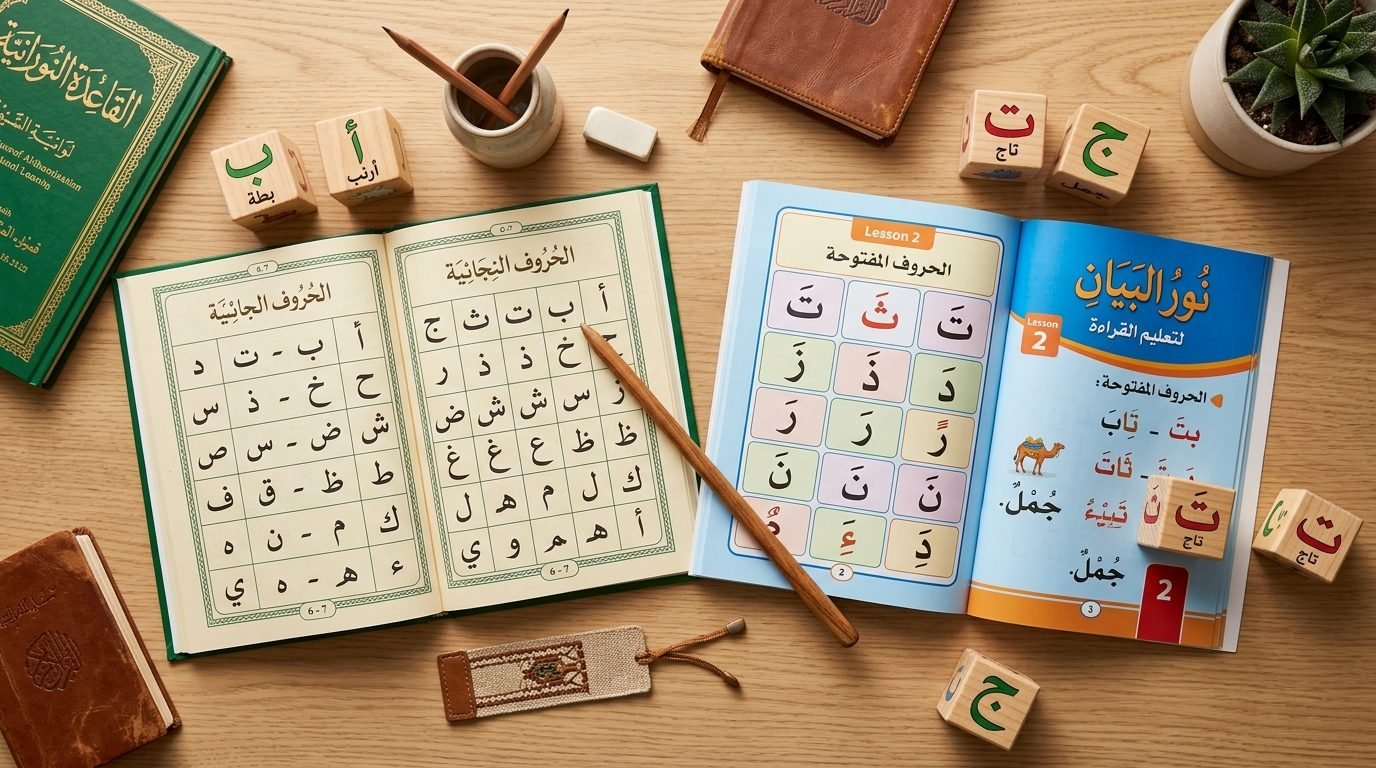
Noorani Qaida vs. Noor Al-Bayan: Which Reading Method Is Best for Your Child?
A comprehensive comparison of the world's two leading Quranic reading methods. Discover which curriculum fits your child's age, language background, and learning style.
Read Guide