3 Tajweed Mistakes Every Learner Should Avoid (And How to Fix Them)
Key Recitation Takeaways
- Qalqalah bounce (قُطْبُ جَدّ) must never take on a vowel sound (Fathah/Dammah/Kasrah).
- Heavy letters (خُصَّ ضَغْطٍ قِظْ) require elevating the back of the tongue, not rounding the lips.
- Pure long vowels (Madd) come entirely through the mouth — test yours with the Nose-Pinch Test.
- Theoretical reading is only 20% of Tajweed; oral Talaqqi with a certified teacher is the indispensable 80%.

Learning to recite the Holy Quran with proper Tajweed is a deeply rewarding journey. Beyond melodious recitation, Tajweed preserves the exact pronunciation and meaning of every Arabic letter as revealed to the Prophet Muhammad (peace be upon him).
However, many students—both beginners and intermediate learners—frequently run into a few common pitfalls. These subtle errors can alter the meaning of an ayah or disrupt the natural flow of recitation.
Here are the top three Tajweed mistakes students make and practical techniques to correct them:
1. Neglecting or Rushing the Qalqalah (قلقلة)
**The Mistake:** The Qalqalah (the echoing or bouncing sound) applies to five letters when they carry a Sukun (ْ) or appear at a pause: **ق · ط · ب · ج · د (قُطْبُ جَدّ)**
Students often do one of two things:
- Drop the echo entirely, making the letter sound flat and clipped.
- Add an unwanted vowel (Harakah) to the echo, inadvertently turning it into a Fathah, Dammah, or Kasrah.
**How to Fix It (The Springboard Technique):** Think of the vocal contact point as a trampoline or a tennis ball bouncing off a wall. Make crisp, firm contact at the articulation point (Makhraj) and immediately release without sliding into a vowel sound.
- *Practice Word 1:* **Al-Falaq (الْفَلَقْ)** — Crisp, strong bounce on the final Qaf.
- *Practice Word 2:* **Ahad (أَحَدْ)** — Clear, clean release on the Dal.
2. Confusing Heavy (Tafkheem) and Light (Tarqeeq) Letters
**The Mistake:** Arabic letters are strictly divided into heavy (elevated) and light (lowered) sounds. Non-native speakers frequently pronounce heavy letters lightly, or unintentionally make adjacent light letters heavy.
**The Seven Heavy Letters:** **خ · ص · ض · غ · ط · ق · ظ (خُصَّ ضَغْطٍ قِظْ)**
*Common Error:* Turning a **ط** into a **ت**, or a **ص** into a **س**, which fundamentally alters the meaning of sacred words.
**How to Fix It:**
- **Elevate the Back of the Tongue:** Raise the back of your tongue toward the soft palate to fill your mouth with resonance.
- **Keep Lips Neutral:** Do not round your lips to fake heaviness (unless the letter naturally carries a Dammah). True heaviness comes from internal tongue elevation.
- *Practice Word:* **As-Sirāt (الصِّرَاطَ)** — Notice the smooth transition from heavy Sad (ص) to light Ra with kasrah (رِ) to heavy Ta (ط).
3. Excessive or Misplaced Nasalization (Ghunnah)
**The Mistake:** The Ghunnah is a resonant sound produced from the nasal cavity (Al-Khayshoom). It is an essential component of Noon (ن) and Meem (م) in specific rules such as Idgham, Ikhfa, and Mushaddad letters.
Many students mistakenly let air leak through the nose during regular vowels (Alif, Waw, Yaa), giving their entire recitation a muffled, nasal tone.
**How to Fix It (The Nose-Pinch Test):** While reciting a long vowel (like *Al-Rahmān*), gently pinch your nose with your fingers. The sound of the long vowel should not change or vibrate at all! If pinching your nose alters the sound before you reach the final Noon (ن), air is escaping through your nose prematurely.
Summary Reference Guide
| Mistake | Letters Involved | Key Technique |
|---|---|---|
| **Weak / Added-Vowel Qalqalah** | ق ، ط ، ب ، ج ، د | Crisp release without adding Fathah or Kasrah |
| **Weak Tafkheem (Heaviness)** | خ ، ص ، ض ، غ ، ط ، ق ، ظ | Elevate the back of the tongue; keep lips neutral |
| **Nasalizing Long Vowels** | Long vowels (A, U, I) | Use the Nose-Pinch Test to ensure pure mouth airflow |
Common Questions & Expert Guidance
Did you find this practical guide helpful?
Qumra Academy Academic Council
All educational and Tajweed guides are authored and verified by certified instructors holding verified Ijazahs with connected Sanad.
Ready to Start a Personalized 1-on-1 Track?
Book a 100% Free Trial Class with a certified Al-Azhar instructor. Get a personalized assessment and tailored feedback.
Related Guides You May Enjoy

How to Build a Consistent Daily Quran Habit for Kids (Without the Struggle)
A compassionate guide for Muslim parents in the West: how to turn Quran time from a daily negotiation into an eagerly anticipated family ritual.
Read Guide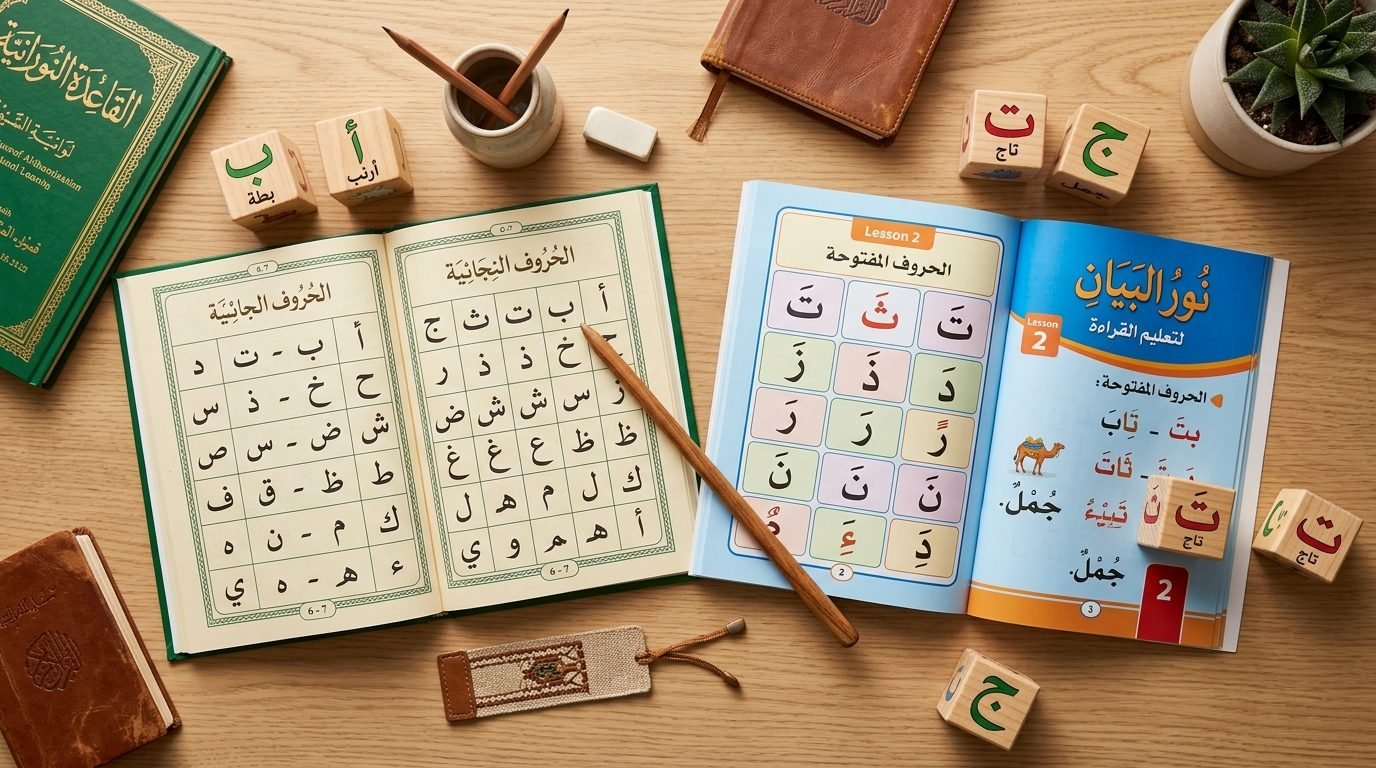
Noorani Qaida vs. Noor Al-Bayan: Which Reading Method Is Best for Your Child?
A comprehensive comparison of the world's two leading Quranic reading methods. Discover which curriculum fits your child's age, language background, and learning style.
Read Guide
The 20-Minute Quran Memorization Blueprint for Busy Working Adults
How working professionals, university students, and busy parents can memorize the Holy Quran consistently with zero overwhelm using the spaced repetition method.
Read Guide